Here’s todays little quiz ……
- What’s this?
- Where does it go?
- How many are on YOUR bike?
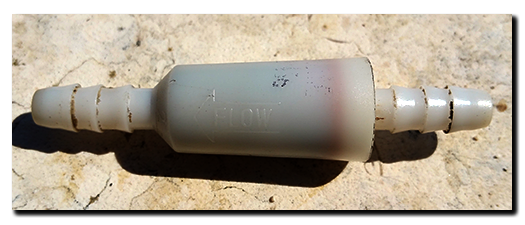
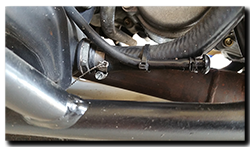
Of course the smarty-pants among you will scream out the answers to 1 & 2 in double quick time – it’s a check-valve or none-return valve and it fits between the throttle body and clutch in the vacuum line. Excellent stuff, spot on …… but question 3 …… one valve or more than one? Hmmm.
Here’s what Aprilia show in the parts manual (click for photo of matching engine) …..
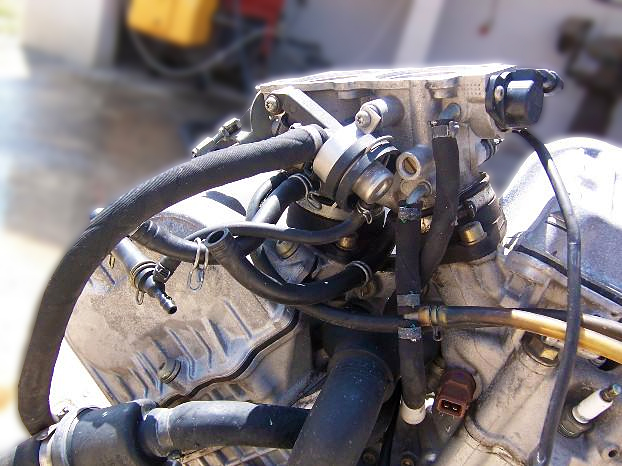
The front cylinder throttle body port has nothing but a piece of clear hose and a bung – the manometer/VAC gauge test point. All the slipper-clutch hose/valve assembly is ONLY attached to the rear cylinder throttle body port and TPS port. This may well be fine and dandy for an 01-03 bike.
But if you have a Rally-Raid or an 04-onward bike, next time you’re under the fuel tank/airbox take a good look at the front hose …… my guess is you’ll have a ‘T’-piece and more black hose disappearing downward below the mire of cables and wires running alongside the frame. Now this might be no surprise to you, but it had me scratching my head for a while I can tell you! 😕
And this is what I’ve got on the Rally-Raid (click to enlarge)……
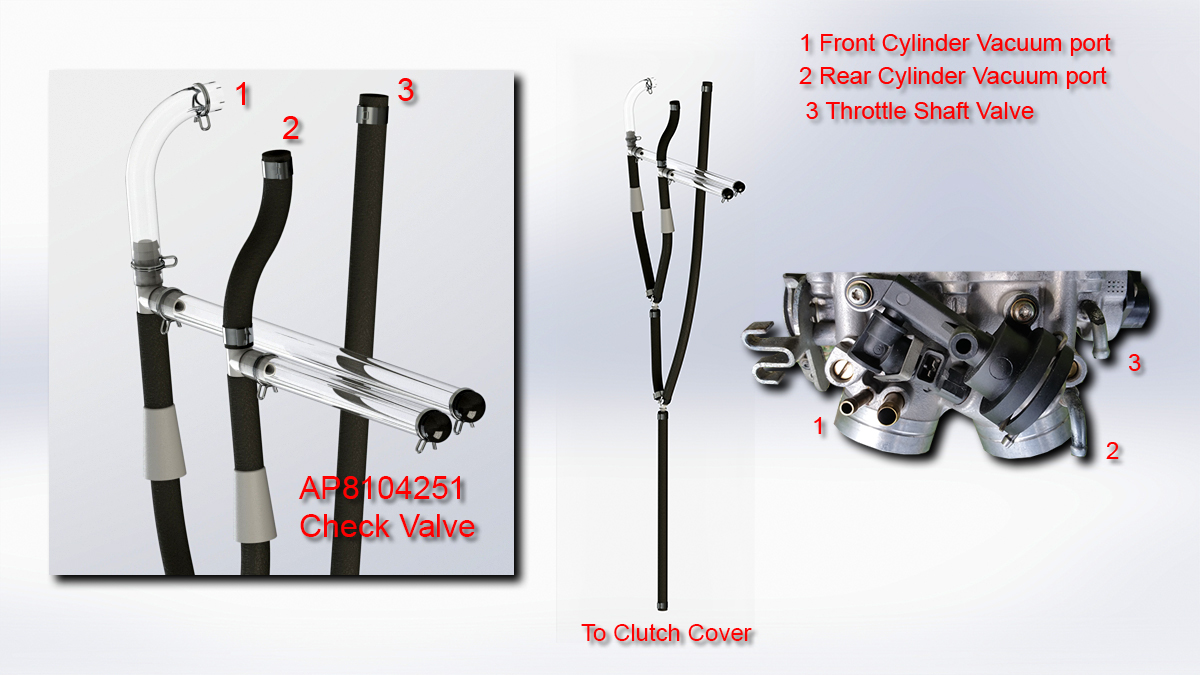
A second complete set of pipes AND a second check valve connecting to another ‘Y’-piece. Why do this? Well this is my hunch, guesstimation, call it what you will ….. the 01-03 Capo has I believe a clutch pack that is 43.6mm thick, the 04-08 is 44.9mm thick. A difference of 1.3mm – in other words the valve springs will be compressed an extra 1.3mm on later bikes and that means a little more spring preload for the vacuum system to overcome when getting the clutch to slip, hence the second set of connections to improve the vacuum – 2 cylinder are better than 1! Also, two sources of vacuum from cylinders running out of phase (60° remember) may well help smooth out the pulses you can sometimes feel through the clutch lever. It simply looks like Aprilia modified our blessed Caponords and just didn’t bother to update the parts manual.
So what’s all the hullabaloo, why rip this poor little thing from the Capo’s delicate innards? Well the long and short of it is that one of them is pooped, shot, completely knackered ….. where air should only flow one way, it flows happily in both. Looking at the defective duckbill valve reminds me of Daffy-Duck cartoons, the ones where Elmer Fudd rearranges his bill with a shotgun! No worries, simply order a replacement …….
……. Aprilia part no AP8104251 Just make sure you’re sitting down when you look at the price! 🙁
I’ll shortly open up a new page with some more 3D images to try to better illustrate how the system is operating at different stages and how to go about testing the valves and what to expect.
 pipe fitted to drain any oil into the front of the airbox, well away from the throttle body and IACV (Idle Air Control Valve).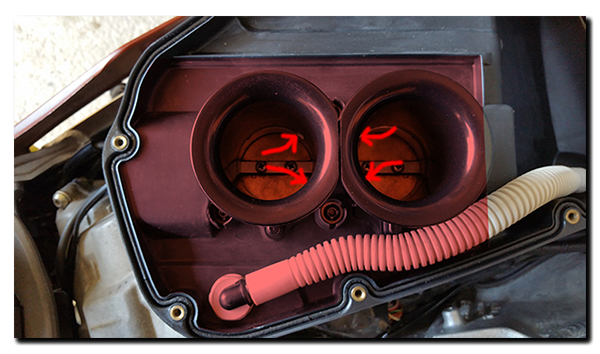
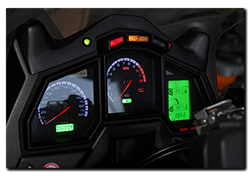 With just over 82,000 miles on the Caponord, the dashboard died. Yes, while about to set off from a rather innocuous little shop car park on a hot and humid afternoon, the dashboard shuffled off its mortal coil … Curled up its toes, bought the farm – as dead as the proverbial Dodo.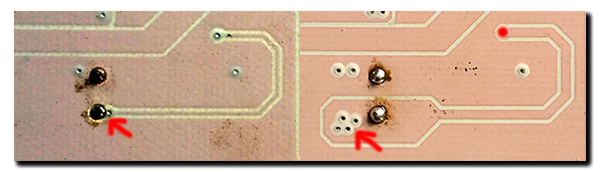
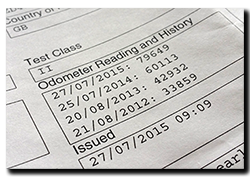 The Capo and I just returned from the last UK-Italy round trip for this year … as seems the norm, the trip was uneventful and the Capo ran fantastic as always. Just before I left the UK, she had a new MOT – no advisories and good for another 12 months. 48hrs later, she rolled into the barn with the odometer reading 80,892 miles and 37c on the air temp gauge – hot, hot, hot!
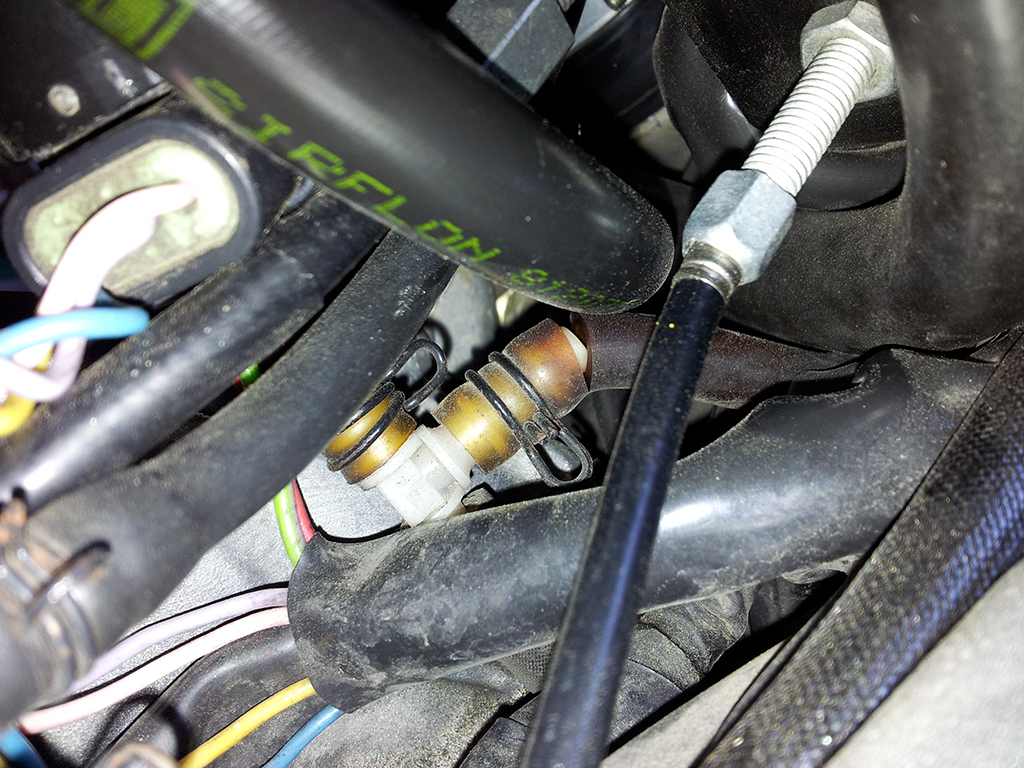
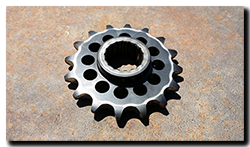 A good few year back when I had a Triumph Trophy 1200, I had an issue of excessive noise from the chain/sprockets – especially on the over-run. They were almost new and as far as I could tell, it was correctly tensioned. It drove me mad for a week or so, until I decided to try changing out the front sprocket, why I can’t remember, but it worked.
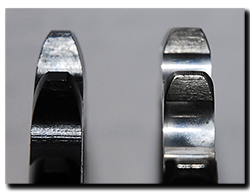 The only difference I could think of is the make of sprocket. I’ve always used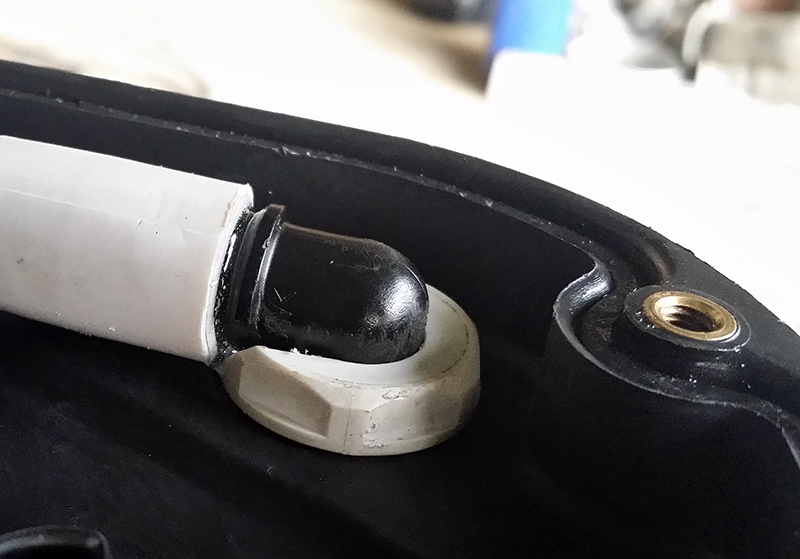
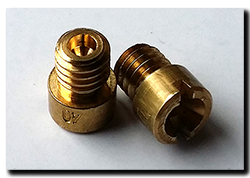 Secondly, and I don’t mind admitting when a change to the Capo doesn’t work – I’ve gone back to the #60 clutch oil jet from the #40. Why? Simply because the benefits were outweighed by the losses …… yes the #40 jet made the initial 1st gear selection go from ‘CLONK’ to ‘clonk’ but it also buggered up all subsequent gear changes, gone was the silky smooth shift that I’d had with the #60 jet. In the end I would say that if your Capo shifts gears smoothly and doesn’t have an issue selecting Neutral, then leave well alone. I’m sure for those with no jet, a blocked jet or a nasty gear shift this may well be a worthwhile modification, for me I’m glad to have the old slick-shift gearbox back again.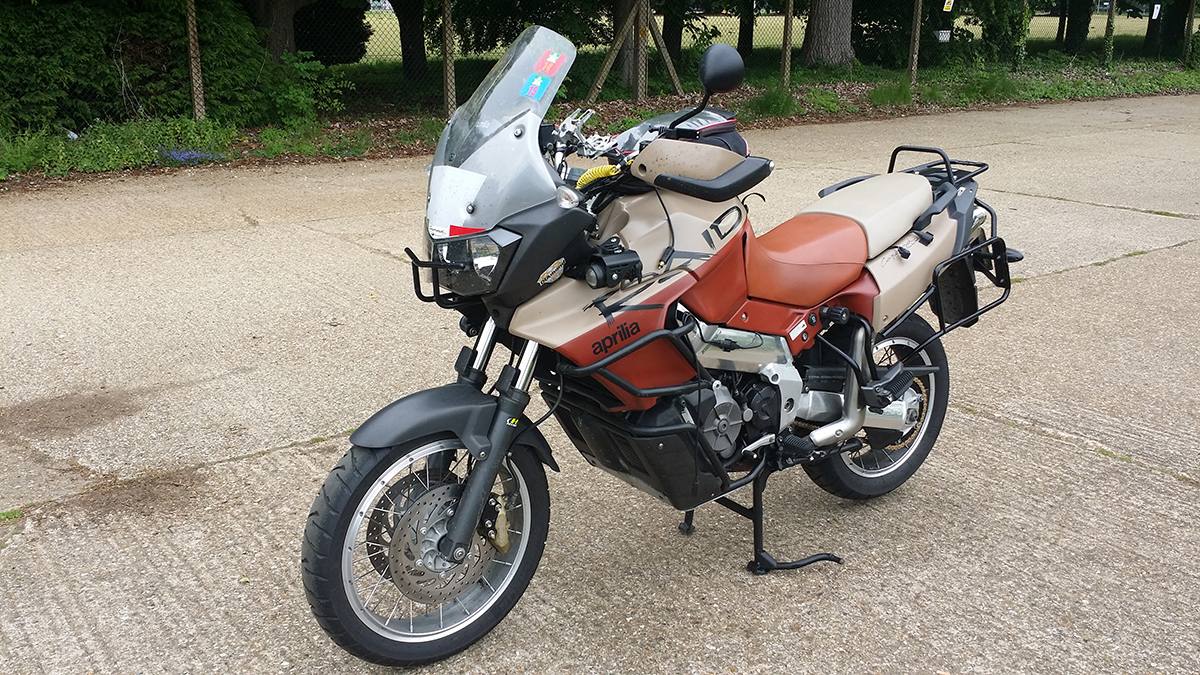
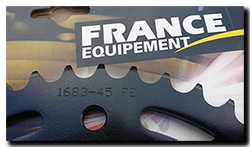 And lastly, the replacement rear sprocket and