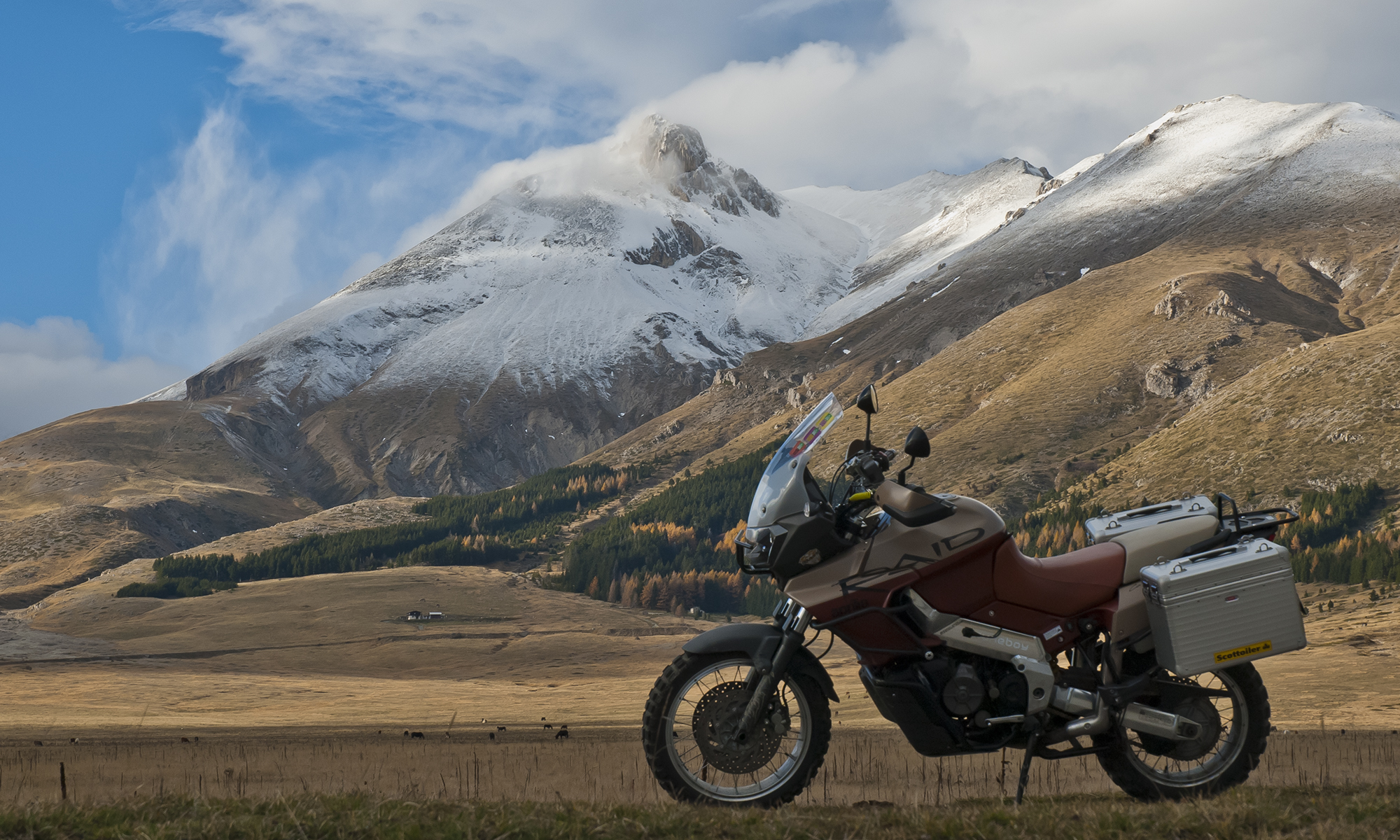

Upgrading the Hella MicroDE lights
 Sometimes an upgrade comes about through necessity rather than looks or performance it seems. I moved out to West Oxfordshire last year and that has not only increased my commute to work, but also reintroduced me to the trials and tribulations of travelling through the countryside – especially at dawn/dusk. This seems to be the time that deer, foxes and badgers are active and at the same time, idiotic commuters are using the 60mph limit as a minimum while thrashing through the dark, damp country lanes. The quantity of dead muntjac deer being testimony to the number of collisions. Of course hitting any of these animals on a bike will probably end with the rider experiencing the unique texture of the road surface at first hand.
This meant it was a good idea to upgrade the old 55W H3 bulbs in my auxiliary lights to something LED and more economical on power. The Hella MicroDE’s were fitted way back when the Caponord actually had pages in the Touratech catalogue …. about 2010 as I recall. The down side has always been that they use a whopping 110W when lit and the Capo has never really been happy with that extra draw, plus the yellow light looks so dated next to the crisp white light from the LED headlights. Last time I looked the available LED H3 bulbs were pretty thin on the ground and frankly, more decorative than useful. In 2025, that seems to have all changed massively and I soon found a pair of LED bulbs that used GC7535 components at a reasonable price.

Sadly, as soon as I removed the rubber rear cover from the DE’s I knew I had a problem. The rear part of the halogen H3’s is a completely different shape to the LED’s and as such the retaining clip won’t fit. Out with the verniers, pad, pencil and fire up Solidworks and the 3D printer ……. a couple of prototypes and an hour or two later, I had two ASA-CF printed clips holding the LED’s nice and snug. Power draw is now approx. 2A each which is way less than previously and of course, the bright white light and spread pattern are simply way beyond what I had before.
The next morning I fired up the Capo at 06:00 and off we went into the crisp cold dark morning with (for once) no cars ahead or behind as I hit the Buckland road. Leaving the village, I fired up the lamps and rode at a comfy 50mph in the middle of the road, confident that if anything moved into the road within the amazing spread of light, I would be able to brake and (hopefully) avoid an impact with mother nature. It was also reassuring to see that the Capo was quite happy with the lamps on – voltage remained over 13.8v and the SparkBright battery-monitor lamp stayed green throughout. A win-win in my books!
So on the one hand, the Capo is winter-ready in the lighting department, but in truth will head back into winter storage by the end of November. But what it has done is make me acutely aware of the incoming shift in the type of riding environment and the changes I need to make on the winter bikes. Next up then, new lights for the Kawasaki ZZR1200 – Black Beauty!