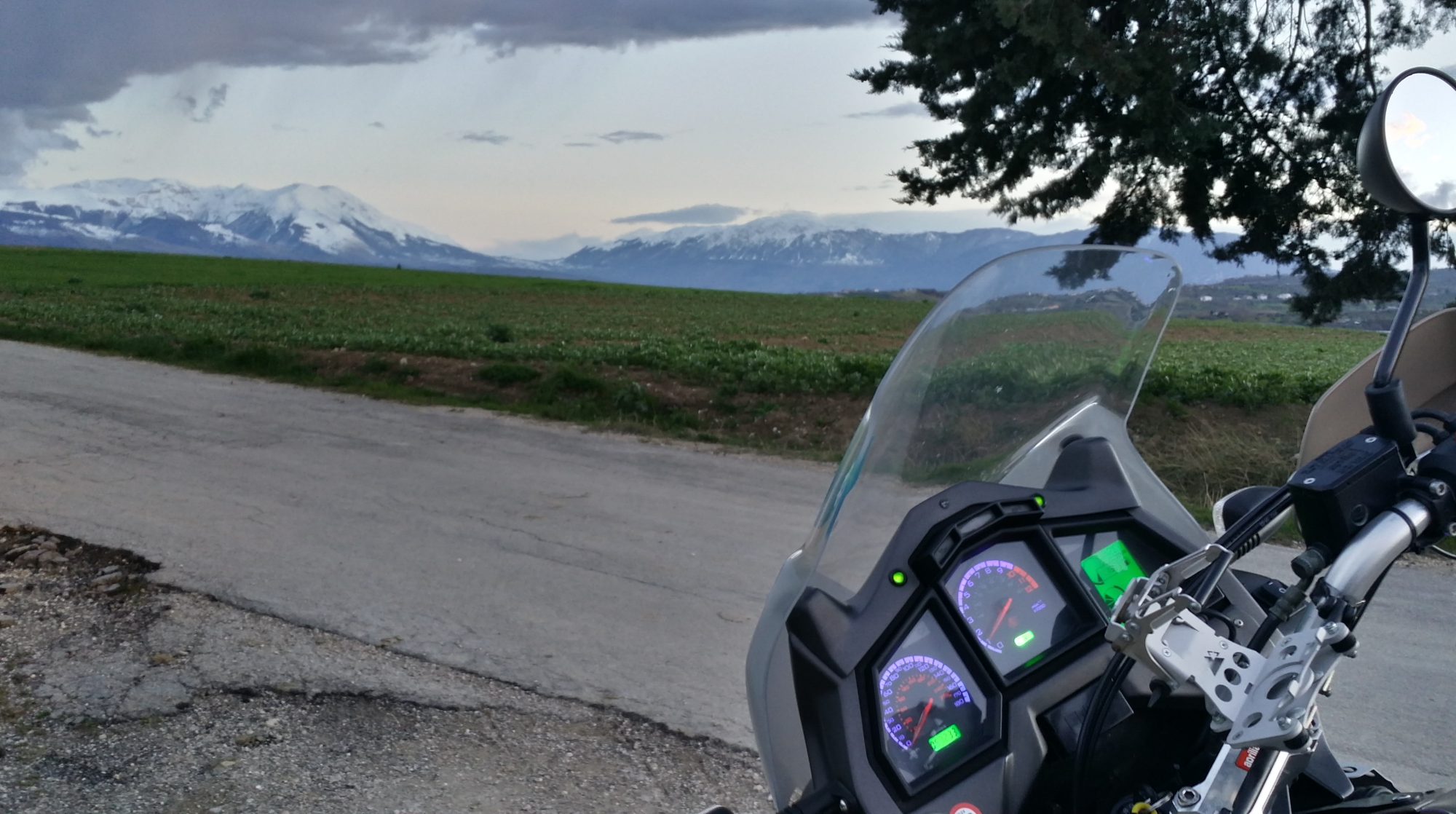

Upgrading the Hella MicroDE lights
 Sometimes an upgrade comes about through necessity rather than looks or performance it seems. I moved out to West Oxfordshire last year and that has not only increased my commute to work, but also reintroduced me to the trials and tribulations of travelling through the countryside – especially at dawn/dusk. This seems to be the time that deer, foxes and badgers are active and at the same time, idiotic commuters are using the 60mph limit as a minimum while thrashing through the dark, damp country lanes. The quantity of dead muntjac deer being testimony to the number of collisions. Of course hitting any of these animals on a bike will probably end with the rider experiencing the unique texture of the road surface at first hand.
This meant it was a good idea to upgrade the old 55W H3 bulbs in my auxiliary lights to something LED and more economical on power. The Hella MicroDE’s were fitted way back when the Caponord actually had pages in the Touratech catalogue …. about 2010 as I recall. The down side has always been that they use a whopping 110W when lit and the Capo has never really been happy with that extra draw, plus the yellow light looks so dated next to the crisp white light from the LED headlights. Last time I looked the available LED H3 bulbs were pretty thin on the ground and frankly, more decorative than useful. In 2025, that seems to have all changed massively and I soon found a pair of LED bulbs that used GC7535 components at a reasonable price.

Sadly, as soon as I removed the rubber rear cover from the DE’s I knew I had a problem. The rear part of the halogen H3’s is a completely different shape to the LED’s and as such the retaining clip won’t fit. Out with the verniers, pad, pencil and fire up Solidworks and the 3D printer ……. a couple of prototypes and an hour or two later, I had two ASA-CF printed clips holding the LED’s nice and snug. Power draw is now approx. 2A each which is way less than previously and of course, the bright white light and spread pattern are simply way beyond what I had before.
The next morning I fired up the Capo at 06:00 and off we went into the crisp cold dark morning with (for once) no cars ahead or behind as I hit the Buckland road. Leaving the village, I fired up the lamps and rode at a comfy 50mph in the middle of the road, confident that if anything moved into the road within the amazing spread of light, I would be able to brake and (hopefully) avoid an impact with mother nature. It was also reassuring to see that the Capo was quite happy with the lamps on – voltage remained over 13.8v and the SparkBright battery-monitor lamp stayed green throughout. A win-win in my books!
So on the one hand, the Capo is winter-ready in the lighting department, but in truth will head back into winter storage by the end of November. But what it has done is make me acutely aware of the incoming shift in the type of riding environment and the changes I need to make on the winter bikes. Next up then, new lights for the Kawasaki ZZR1200 – Black Beauty!
TPS (AP8124866) failure and replacement

OK, so a quick post before the one about “Fixing the MCCruise control”. Remember the magical fix-itself TPS problem I mentioned last post? Well it mysteriously un-fixed itself in a rather worse fashion while sat in lane three of the A420/A34 roundabout at 06:30 in the morning! Idling beautifully at 1,250rpm one instant, a little shudder or two to get my attention and then silence …… just as the lights turned green. To be fair she fired straight up again on the button, but now the idle was barely 1,000rpm and the Capo really doesn’t like the idle that low. I got to work, went to kill the ignition and she sat sweet as can be back at 1,250rpm ….. now if there’s one thing I sure hate, it’s an intermittent fault. So rather than the Capo and I falling out, I went into work and stewed on the problem while peering out of the canteen window at the bike and sulking like an irritated school boy.


Later, I fired it up to head home and all was lovely with the world. To be honest I was more annoyed than if it was broke – broke I can fix. We got home in an uneventful ride, but again the idle was low …. 1,000~1,100rpm but stable. This was now officially a lovers tiff! I’d gone over so many possibilities in my head, but in the end gut feeling was still saying it was a faulty TPS. So that’s what I went with. Next day I dug out one of the spare TPS’s and tested it – 1.2KΩ ±10% pins A-B and 1.2KΩ ±10% thru to 2.4KΩ ±10% pins A-C with the throttle closed to wide open. The following day the swap took no more than 40 minutes going steady – tank raised and perched on top of the airbox, remove two T30H screws and the electrical connector to release the TPS …………. swap sensors and reverse everything to put it all back together, simples. Then of course the magical and most important bit ….. use TuneECU to reset the TPS. Now I noted the TPS voltage as 0.27v throttle closed and 4.08 throttle fully open – this was constant and repeatable every time – perfect. Finally, I took the bike for a nice 20 mile ride and once back secure in the yard, ticking away in the September sunshine as she sat cooling down, I cracked open a cold beer in celebration of a job that appears to be successful.
 Things I learned along the way ….. in TuneECU you can see that the TPS position is sampled for 16 distinct columns in the fuel maps. Of those 16 positions, 7 are for throttle positions of <10% while the other 9 positions account for the remaining 90% of the throttle movement! So it’s fair to say it is used mostly by the ECU for small throttle openings …. primarily the 0-6% range and this when measured afterwards was where the TPS was giving erratic readings. Symptoms on the bike – well primarily erratic idle, but also poor running (mostly rich – smell) in the small throttle opening range. Crack the taps and give the old girl the reins and the Capo rode perfectly normally. Fair to say the symptoms are similar but slightly different to an air leak and of course common to both cylinders, so nothing like an ignition issue. It was more random – cold, hot, time etc. it just didn’t feel like it was a leak. Anyway, the job is done now.
After a few days of the Capo behaving itself, I dug out the Dremel and opened up the sensor to have a look at the tracks inside for a definitive answer, a small Capo autopsy if you will. Once inside, I certainly didn’t expect it to be built the way it is, I expected a simple potentiometer and wiper arm ……… in reality, it uses a plastic strip with several resistors printed onto it and a wiper arm that bridges the two large resistors (left on pic). From the look of it, one of these wipers had lost spring and was no longer making good contact with the resistor it swept over.

As of 26/09/2025 AP8124866 is available from Ultimateparts.net at £224.46 inc. VAT, but only available on back order from Fowlers (Bristol). At that price it makes sourcing one on Ebay most certainly your best option.
Well, it’s over ………………..
 Yes indeed it is all over. No, not the love affair with the venerable Caponord!! The three week holiday to Spain and Yorkshire (UK Caponord rally) is over and boy do I miss it already. Throughout, the Capo ran very well with only one odd fault for a couple of days that miraculously fixed itself – now that’s my kind of fault. It started just before I left … the RPM was slightly elevated at approx. 1,500 instead of the 1,250 set in the ECU. I hooked it up to TuneECU and hit TPS Reset and it dropped instantly – all good. Then a couple of days later, on the way to the ferry at Portsmouth, I noticed it was elevated again. Over the next couple of days it seemed to fluctuate between 1,250 and 1,500 for no obvious reason – raising or lowering at will. Then it just went away and has not come back since. All very strange. My guess is that it may have been a bit of stiction in the throttle plates that freed itself up with the daily use in Spain. But I guess I’ll never really know for sure.
After that it just did what it does best – keep piling on the miles – and let me enjoy the ride, scenery and company. Spain was hot (of course!) and Yorkshire wet ( double of course!!) so we both were put to the test for sure. In Spain I used the Knox Tor mesh jacket & Urbane Pro Mk2 mesh trousers over Rukka Outlast under-gear (all super cool) and Klim Badlands Aero Pro gloves all finished off by my trusty Daytona Travel Star GTX boots. For Yorkshire the suit was swapped out for the Rukka Kingsley two-piece suit and boy was I glad to have it’s excellent waterproof ability. So OK …. that’s the product placement out of the way, what about Capo updates/upgrades?


Well not much actually, but what there is has been unobtrusive and potentially useful. Firstly, the front axle spoke-carrier had a rebuild with new 3D printed parts in a stronger material that looks better. Secondly, the top-box got a new 3D printed warning triangle finished with reflective tape and in the middle a 3D mounting for a 50-second Firestick (fire extinguisher) ….. all recessed into the foam lining so it doesn’t affect luggage capacity, nor add noticeable weight to the lid – a win-win! This was all topped off by a set of luggage bags from xxxx made especially for the Raid aluminium luggage. 1x large bag for the left hand pannier (main “hotel” bag), 1x large bag for the top box (bulky items and tech gear) and two half-sized bags for the right hand pannier ( secondary “hotel” bag and tool/spares bag). These were worth their weight in gold on holiday and I’m so glad I had them made – perfect!
So now I’m back what’s next? Well the front INNOVV K3 camera has developed a fault and appears to be causing the unit to freeze or record damaged video. As part of the fault-finding process I swapped the front camera from the ZZR1200 to the Capo and the system worked fine. So now I’m lighter by £73 (after discount) for a replacement. I can’t grumble really, it’s been in use for four years. Next up will be a mix of end-of-year mileage building and general servicing before winter. I’d really hoped to get the Capo through 190K miles by winter with a view to pushing on toward 200K next spring …… the long term goal is to then retire it and make it an ornament in the living room …. minus the luggage of course. Now I’m living the bachelor life once again, my home has become a shrine to all things motorcycle, not quite engine-in-the-bath, but not far off!
Oh … and yes, the stable has increased by one more Caponord. I’ve taken on my friend Andy’s Mk1 (Bat-ear) Capo. It’s now sitting under cover having been robbed of a few parts (levers etc.) to take away on my trip. Now I’m back, everything can go back on and I’ll maybe use it as a winter-hack before using it as a donor bike in the spring for the other RallyRaid (NK03). Before winter hits there may even be one more Capo arriving – a rather special one – another Rally Raid! I’m currently in talks with the owner, let’s see what happens. Fingers crossed!
Next weeks super-exciting instalment … fixing the MCCruise cruise control.
Shoei announce the Neotec 3
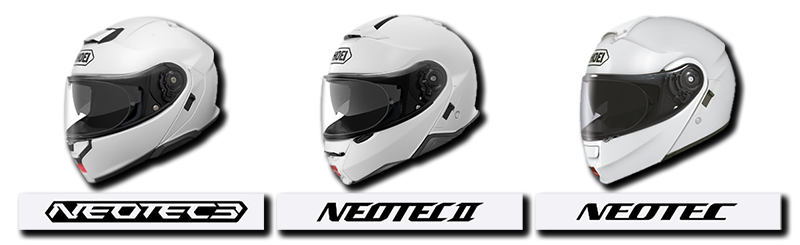
If you look back at the history of the Shoei flip-front helmets, you notice a pattern – they release a new one every 6 to 7 years. Syncrotec, Multitec, Neotec, Neotec II and now the Neotec 3 – like clockwork! So with my Neotec II just over five years old earlier this year, I’d been looking online for info about a replacement. Disappointingly, other than speculation and fantasy, hard facts regarding a replacement by Shoei were none existent. And so the dilemma …. take a gamble and buy another Neotec II knowing it could be replaced imminently or simply wait, maybe well into next year. Choices, choices!
Then yesterday, September 1st, out of the blue, Shoei released the Neotec 3! First I saw it pop up on sportsbikeshop.co.uk ….. then I went over to Shoei Europe website for a sanity check and afterwards throughout the day, watched in amazement as the online retailers updated websites and all manner of bloggers etc who had been trialling the new helmet were released from a non-disclosure embargo and began posting videos and reviews. All rather surreal!
From what I read and watched, I was mildly impressed overall. The changes seem subtle but an overall improvement from the II – but nothing ground breaking. Is it a ‘drop the II and grab a 3’ helmet …. not really. If however you’re replacing an end of life helmet, then it’s most definitely worth a look. For those moving from a II to a 3 the most annoying thing is that the Sena SRL-2 audio system won’t fit in the 3 – yet. I did read on one YouTube channel that an adapter kit will be available to make the SRL-2 fit the Neotec 3, but until that happens you are stuck with having to fork out even more money for the SRL-03 system. But then again, I have to ask myself what percentage of Neotec owners went ahead and fitted the SRL-2 anyway? My guess is the statisticians at Shoei have worked out the gains and losses across the markets already!
Helite e-Turtle2 air vest
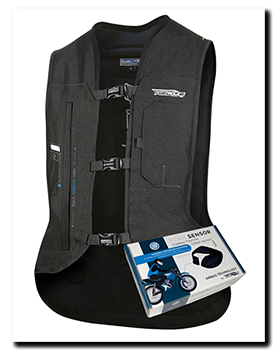 Today a post on a new bit of kit in my wardrobe and how a couple of companies renew your faith in how retail should work.
First, the bit of kit …. a black Helite e-Turtle2 air vest with optional motorcycle sensor kit. In all honesty I’ve been dancing around the purchase of one of these safety garments for a couple of years, but only just bit the bullet after a rather sobering article in the press, where a Police rider heaps praise on one of these devices that saved him from serious injury after a rather ugly incident on the M25. Later I learned that 16 Police forces now use these devices along with many other agencies. I was sold, and the order was placed with sportsbikeshop.co.uk for the vest, sensor kit and a spare gas canister. Of course I don’t ever really want to use the first canister, let alone a second, but as the saying goes …. better to have one and not need it, than need it and not have one!
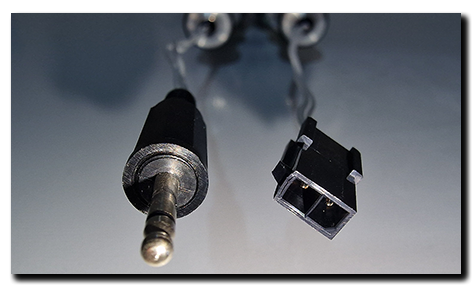 Within a couple of days I was stood marvelling at my new purchase, more on which I’ll write later. But before that, I have to tell you the ‘good retail’ story! Being a curious sort of soul, I opened the spare canister and compared it to the canister fitted in the vest …. there was a difference. The electrical connector in the vest was a locking two-pin item, but on the spare canister it was a jack plug. Hmm … had I ordered the wrong one? Back to sportsbikeshop …. no, they only listed the one type of 100g canister. OK, over to the Helite website and slap me sideways, only the same canister with the jack plug is shown. Now I
 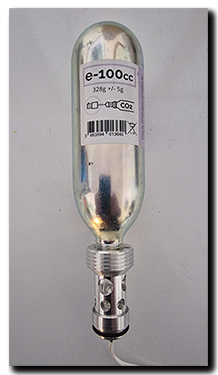 was stumped. So the next day I called Helite and received a massive apology as it turned out the new vests (Mk2?) have the locking plug connector and a batch of spare canisters had only just been received, so no distributors had them yet! Now this could turn ugly … Helite could say get your distributor to sort it out and the distributor could argue they sold me what Helite say fits. But not in this case – both were fantastic, Helite sent Sportsbikeshop a batch of canisters and explained the issue, meanwhile Sportsbikeshop and I swapped a couple of emails and hey-presto a correct canister arrived this morning, just 48hrs after noticing the problem … no fuss, no arguing, just good old fashioned customer support – so thank you both, I’ll be buying from you again that’s for sure!
So with that little drama behind me and the rain cloud parting it was time to delve into the fascinating world of air vests. The setup of the vest is simple – pop it on charge with the supplied cable and when the vest LED changes from amber to green, you are good to go. Battery life is rated at up to 25hrs with the led turning amber when the vest has approx. 2hrs of life left. Charging takes approx. 5 – 7 hrs so they say. The charging cable supplied is a USB to power plug – an unusual cable and not one you’re likely to have kicking around, so I figure it should stay with the vest for safe keeping … and there is a tiny pocket in the vest that’s not much use for anything more than a credit card or loose change but is ideal for storing the cable – sorted.
Next up then, the motorcycle sensor. First you need to pair this to the vest (dead easy) then fit it to the fork leg of your bike. Again, very easy with various length straps and bits to fit a massive range of fork diameters. They say the sensor is good for up to 5 years and should be tested monthly using a little magnet supplied. Now my bike looks like a local bad boy wearing a tag on his ankle! Incidentally, the vest can be paired with up to 5 sensors if you have multiple bikes. Nice.
Now the air vest itself. Well the construction is first class and I would say the fit … unobtrusive and comfortable. I bought the XL-L, one for the more ‘portly’ rider …. both the XL and XL-L use a 100g canister while the smaller size vests us a 60g canister as their air bag volume is smaller. This does add a little more weight to the right-hand side of the vest, but once you’re wearing it the weight disappears. In use the vest is absolutely fine and doesn’t hinder my movement at all, you can even wear a rucksack with it, but there are a few caveats (loosen straps etc) otherwise you could be in a right pickle if it deploys! Turning the vest off and on is a simple quick-three-taps of the button. If the vest is powered up, but doesn’t move after 40 seconds, it goes to sleep to conserve power. To wake it up, simply move the vest and you’re good to go again. The vest itself comes with a 2 year warranty which extends to 4 if you register it with Helite. They do recommend the vests are returned yearly or at most two yearly, if damaged or deployed more than 7 times for a service/inspection, which appears to cost approx. £75 plus p&p.
So far so good. Putting aside what the vests purpose is for a moment (loads of YouTube videos available anyway) I just want to spend a moment thinking about some of the features which I think should or could be addressed in a Mk3 version to make the garment even better. In my eyes, they’ve missed a trick by not pairing the vest with an app. I know, everything nowadays has an app … but when well written they enhance the function of a device and I think the Turtle vest could greatly benefit from one. Take power for instance, the vest only uses LED/beeper to inform battery status – an app could show detailed info and predict when the vest will run out as well as being used to alert the rider. An app could also show electronics pack and motorcycle sensor status and again, be used to alert the rider if either develops a fault. An app could also for example, be used to alert emergency services when a deployment is registered. And what about selective profiles road/race/off-road algorithms (like ECU maps) and the ability to detach from the motorcycle sensor if required. I’m sure there are many other things as well, but that’s just a few that come to mind.
Also on the wish list – charging. The current 5 – 7 hours seems a long time, I’d like to see fast-charge functionality bring that down to 2 -3 hours if possible. Also the charging cable .. why a proprietary power connector when USB-C is now becoming the connector of choice? And while you’re at it, design the electronics it to accept charge while it’s functioning (currently it only does one or the other) then a power pack can be connected for those looooong days in the saddle! After all this, please don’t think I’m maligning the existing e-Turtle2 vest, I’m not, and I’m really glad I purchased it. I’m just thinking how a great product could be made better and even more user friendly in the future.
Lastly I just want to mention the differences (as I see them) between the standard Turtle2-lanyard deployed and the e-Turtle2. In essence the only difference appears to be the triggering method – one electronic and one that uses a lanyard attached to the bike. The latter requires the rider to move far enough away from the bike for the lanyard to separate from the vest, thus triggering the air bag deployment. The electronic vest relies on sensors and magical algorithms to do the same (and the bikes sensor if fitted) … bottom line, deployment should be quicker and reliable for different incident situations.
NOCO NLP14 Lithium battery (fitted November 2022)
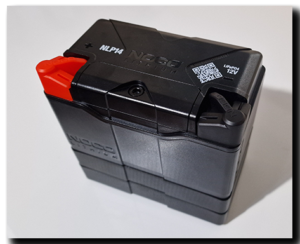 During its life the Capo has had two Lithium batteries – the original Shorai, fitted in October 2011 and used for about 3 months, and now the NOCO NLP14. It’s fair to say, similar technologies, but also a decade of development different.
So what was the original problem with the Shorai? Very simple answer – temperature. Above an ambient 13-15C it would crank the Capo no problem, but cross below that particular Rubicon and it just stalled the starter motor until some heat was put into the battery, usually by running the headlights for a few minutes. Frankly, this was an absolute pain, hence swapping back to a good-old lead acid battery. It is this particular niggle that I have not come across yet with the NLP14 in my ZZR1200 even though we have had night-time temperatures dipping down to as low as -7C of late.
Installation
The NLP14 comes with some smashing cast/machined brass terminals that look lovely and offer a multitude of connection points – pretty and practical. But also too clever for their own good! On the Capo, Andy (Beasthonda) found that they caused the cables to sit far too close to the frame. So the terminal was modified by cutting approx. 4mm from the two sides and making the fixing hole into a slot to compensate. This allows the terminal to sit further ‘into’ the battery body and clear the Capo cables away from the subframe.
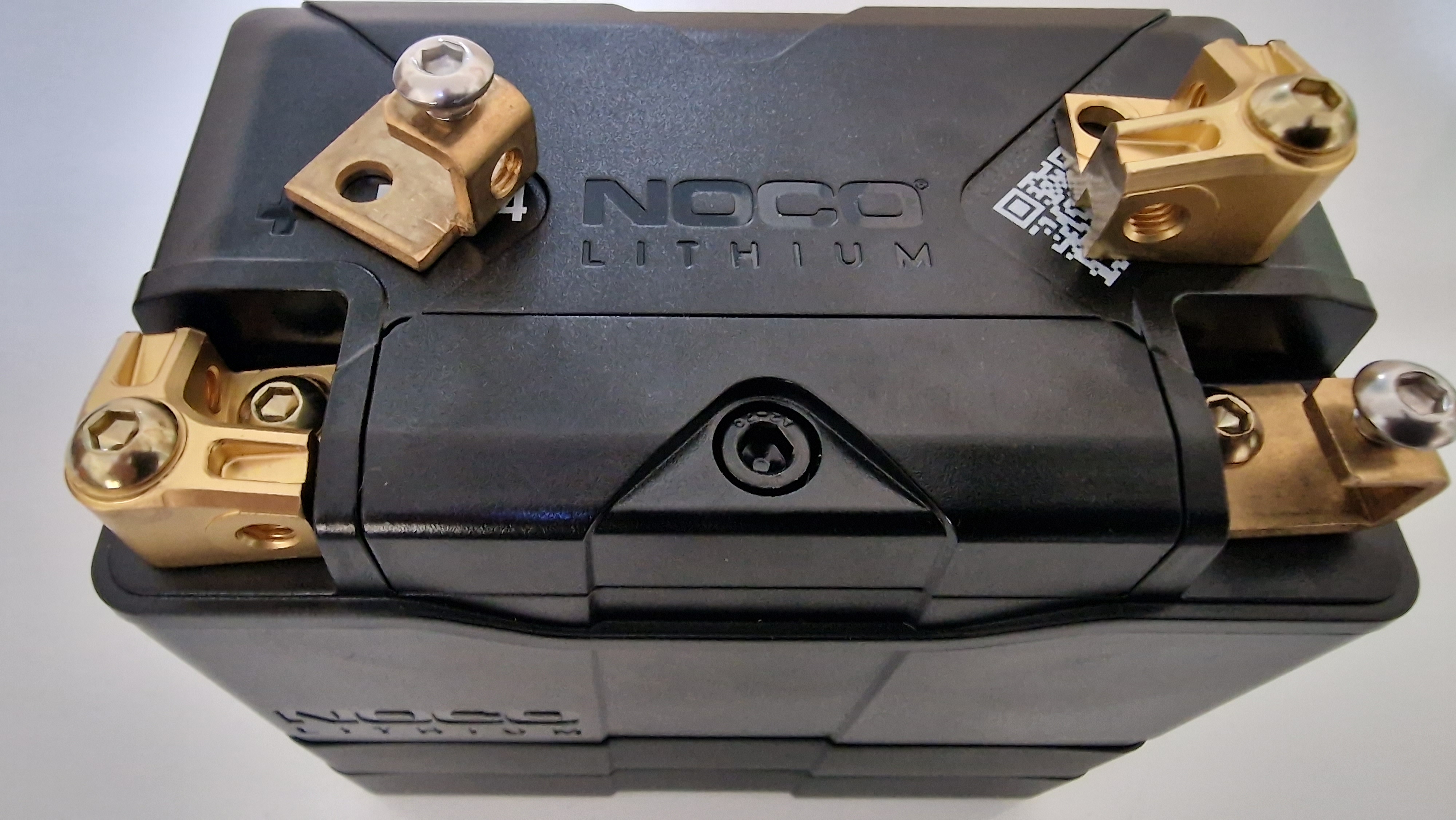
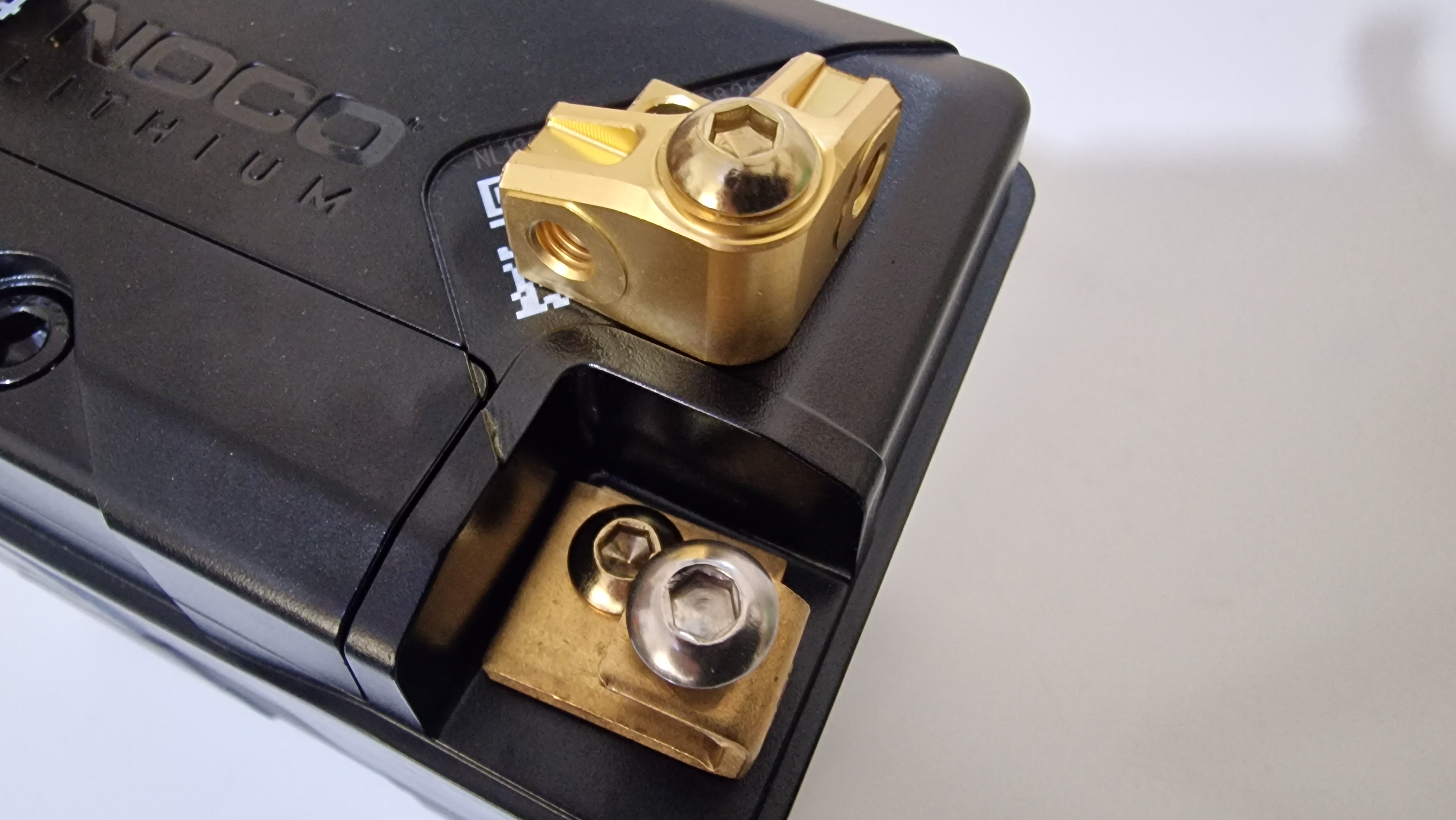
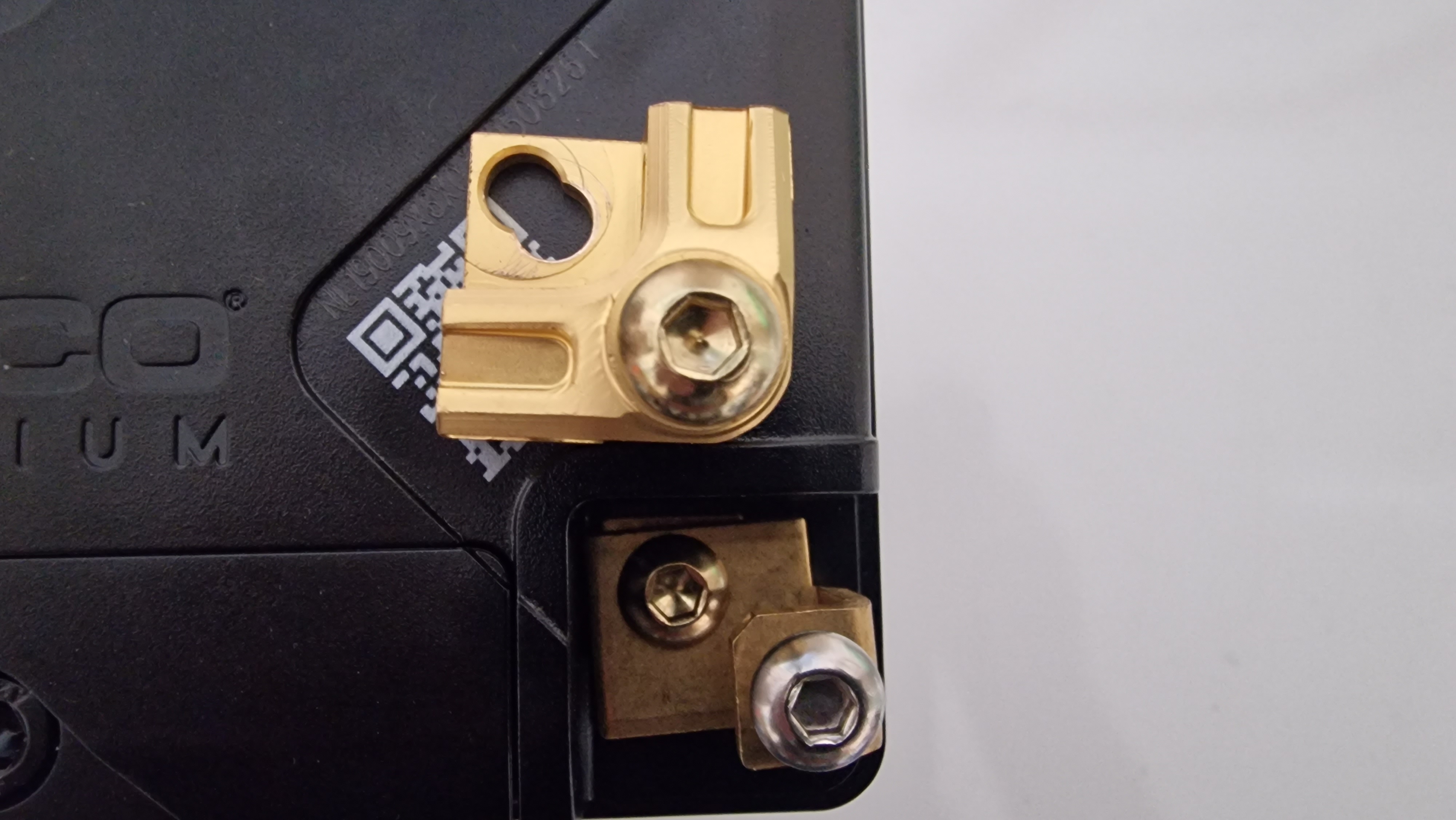
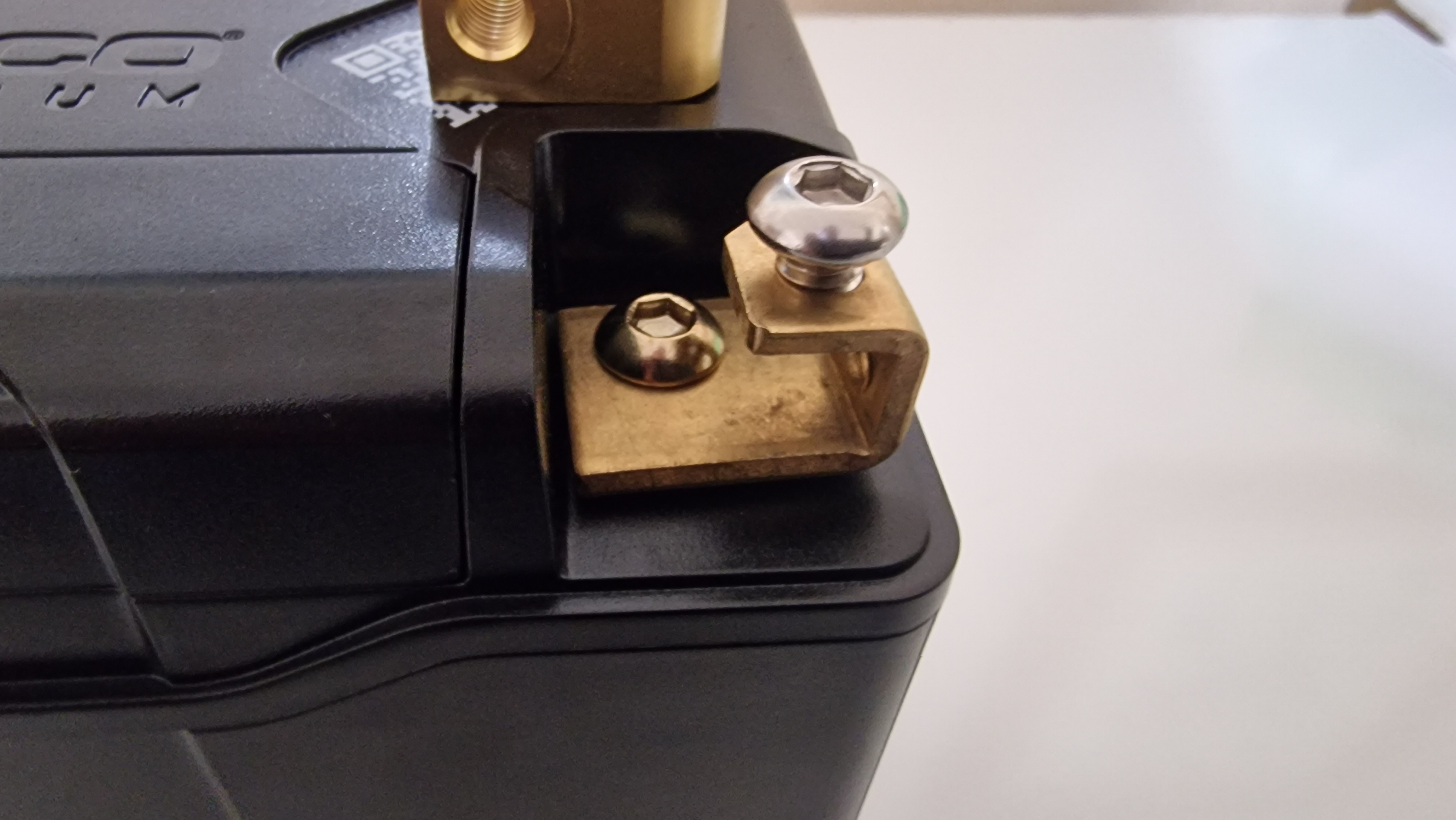
An alternative fix is to buy a couple of brass screw-on terminals from Motobatt. The MB-TERM-003 fitted just perfect and although they don’t look anywhere near as pretty as the NOCO terminals, they do the job just fine without cutting and drilling. They are made of 4mm thick brass and also have two extra attachment points – the upper being standard for the Capo. You can see from the pics, that there is a cover between the terminals held by one screw … this needs to be removed to fit the battery into the Capo. It’s simply ‘bodywork’ and just makes the battery mimic the shape of a few different battery types. In the end the battery took a only a few minutes to replace and is an almost exact fit for the Capo battery box (no padding required!) and the cables are well clear of the frame as well.
Performance
Simple …. It does exactly what it claims on the website. Both the Capo and the ZZR batteries have performed perfectly through winter – neither giving a moments problem. In fact, recently, the ZZR spent an extended time away and after a few weeks the tracker warned of a low battery voltage. Annoying, but to be expected with a tracker and camera system drawing parasitic voltage for such an extended period. By the time I got to it, the voltage was well down for a Lithium battery and I had taken my jump starter pack along as I expected to need it. In the end, even with the voltage reading only 12.18V I was gobsmacked that it fired up when I hit the starter button out of childish curiosity! But of course, the ZZR is a lovely inline-4 …. would the battery still crank the quirky-Capo in the same predicament? Truthfully …….. I don’t think I would have tried, we’ve all heard the camp-fire tales of dashboards going south and other electrical gremlins coming to play when poor-voltage fairy is on hand.
Bella Italia ….. my old friend!
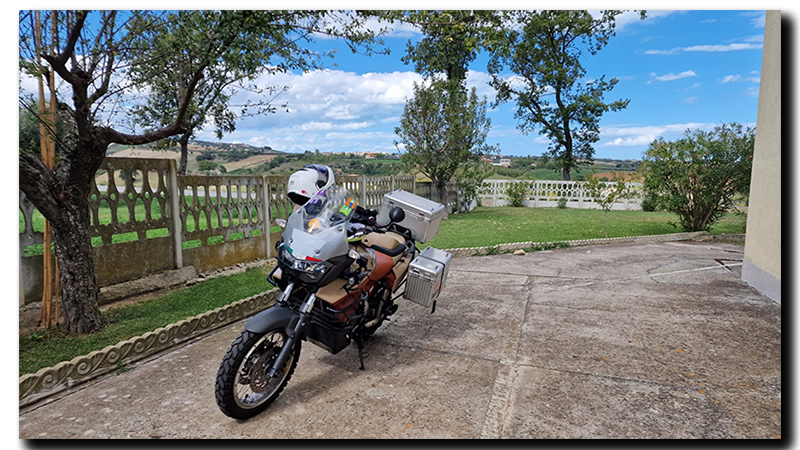
Well it has certainly been a while since I last posted on here, so maybe now is as good a time as any to pick up where I left off. As you can imagine, the last twelve months have seen many changes and a lot of things that needed to be ticked off the list of life …. the most recent being a run back home to Italy after almost four years. 2020’s Covid lockdown didn’t help of course and then after Jan passed away last year I just couldn’t face the trip alone. But eventually the clouds parted and the Caponord got to do what it does best, run faultlessly for almost 4,000 miles over a couple of weeks! This then is a potted summary of what stuff worked and what could be improved for next time.
The fact is, lots has changed since I last travelled over – all my riding gear is different for one. The Capo has had a fair amount of maintenance/refurb during those years and even my cookware of choice had changed! Gear wise, I’m now using Rukka/Daytona and of course the venerable Shoei Neotec 2 with Senna intercom. All performed faultlessly especially in some prolonged and very heavy rain in Northern Italy/Switzerland. Expensive gear yes, but worth every penny in my book. Oh and I can’t leave out the surprise of the trip … EDZ Merino wool socks! Those and the Daytona boots kept my feet comfy warm and dry like never before, absolutely fantastic.
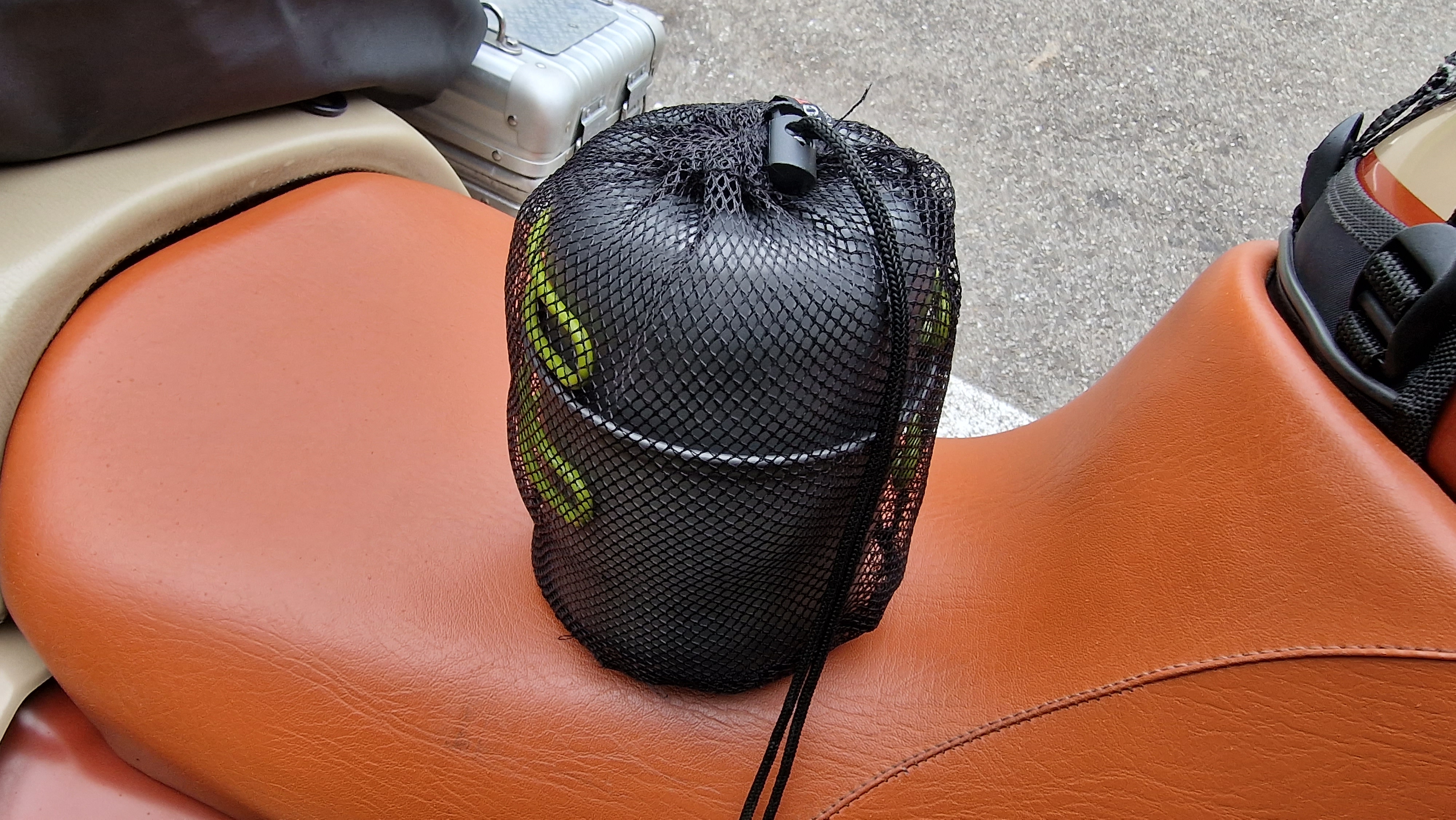
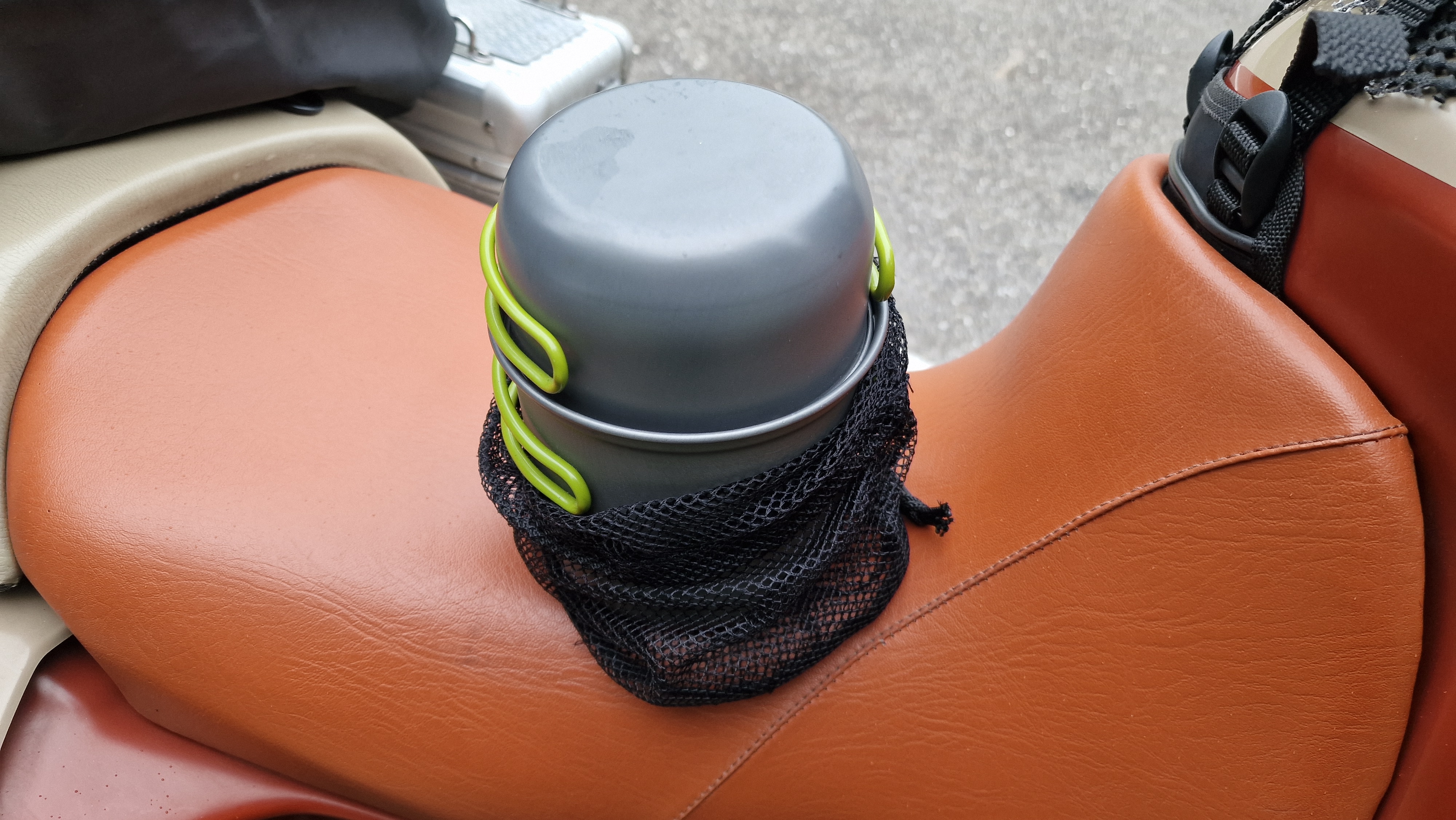
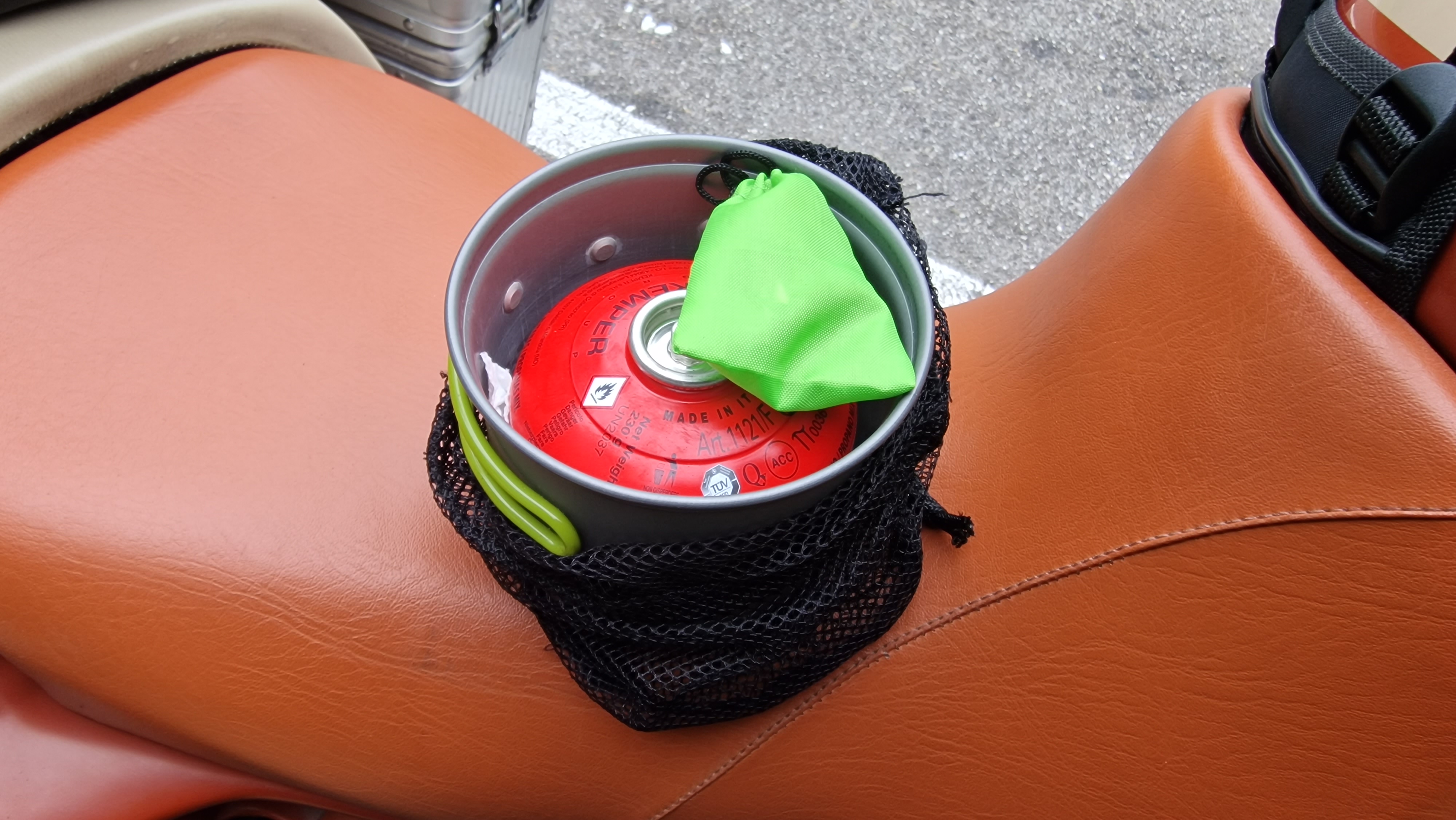
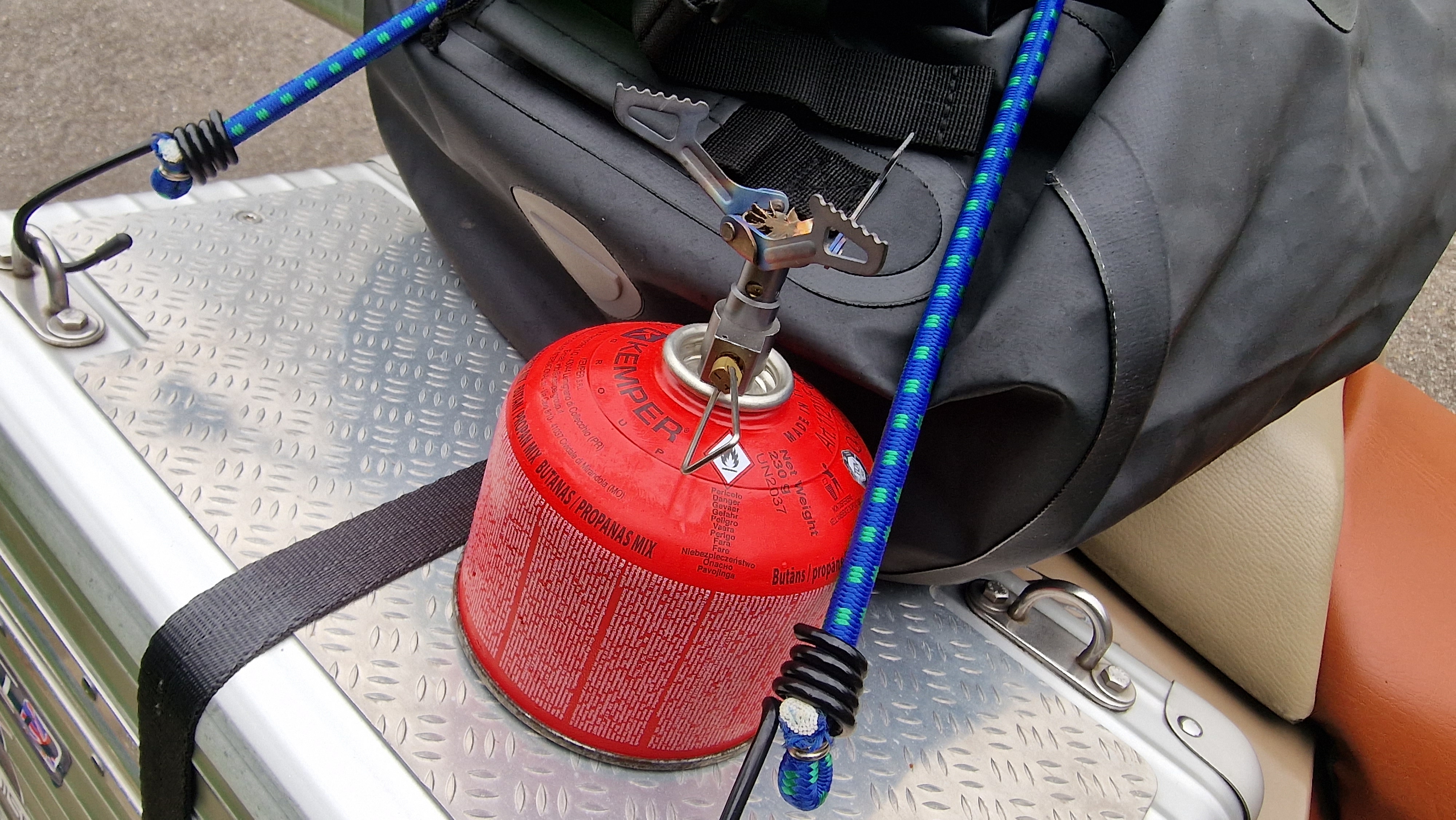
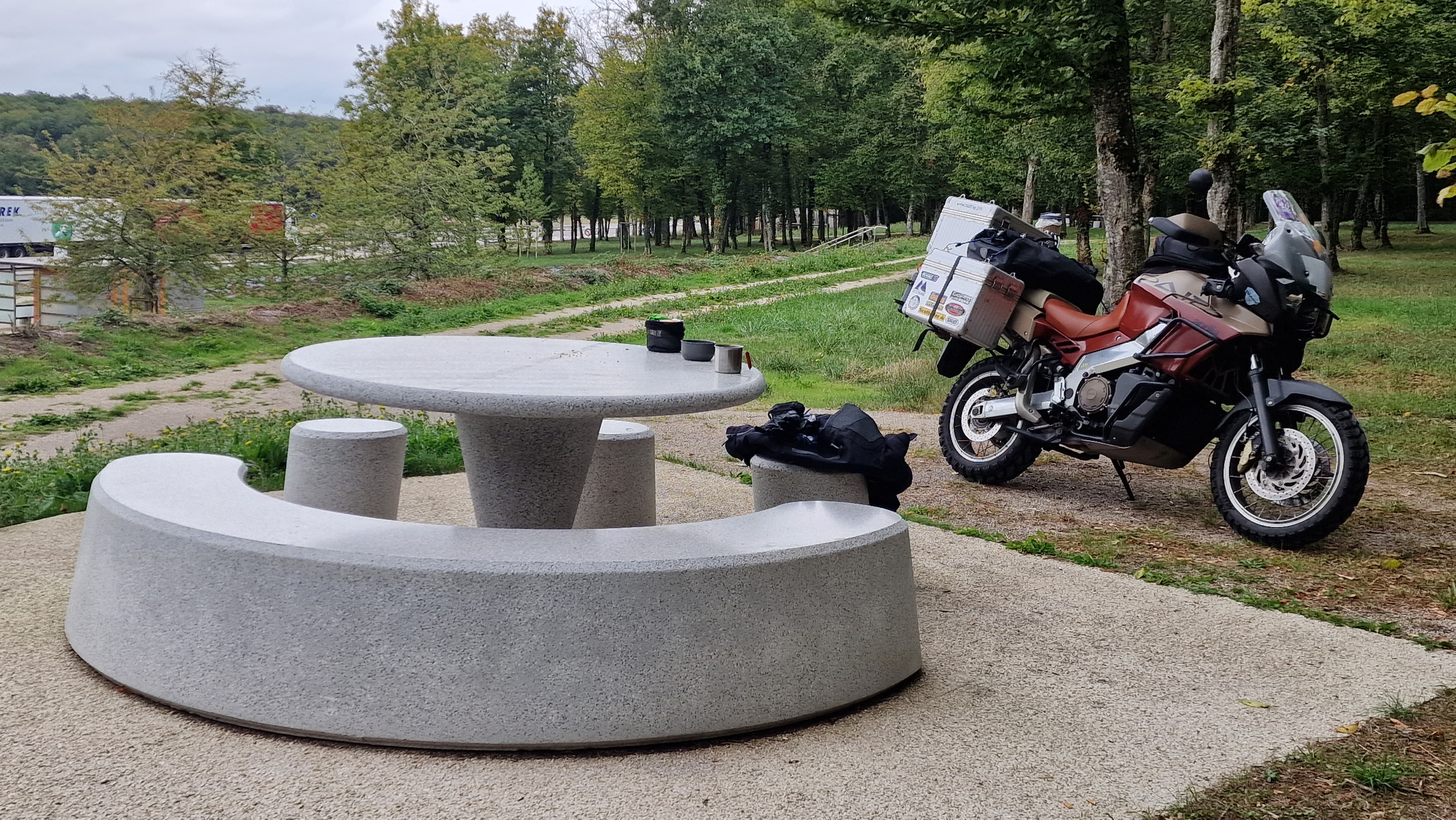
Cookware wise, the old Trangia stayed in the loft and I used the much smaller and neater gas cooker that I got from Manuel over at motrag.com ….. as a one-person unit it worked fine for me. Hot coffee on the go in the smaller mug and and a re-heated pasta dish in the bigger one was just about perfect after a long run. Simple, compact and a doddle to use, it’ll stay the cooker of choice for now.
One concern on the trip was the Capo’s battery. Throughout, the voltmeter showed charging ranging from 13.9 – 14.2V depending on load, but less than an hour after shut-down the battery standing voltage would fall to 12.4 – 12.6V and that isn’t great. Ultimately it never actually gave me any trouble, but it was waving the imminent flag of failure, so time for replacement. As soon as I was back in Blighty, I ordered a NOCO NLP-14 LiFePO4 battery. I have exactly the same one on a ZZR1200 and Andy (BeastHonda) has one on his Caponord ….. short and simple, they work. For the ZZR, it was a straight swap, but for the Capo, the terminals have to be modified slightly – no biggie and I’ll post more on that later.
Other than the battery, the Capo performed brilliantly, returning an average of 46mpg using the heavily modified Catfish 50429 map/airbox/snorkel and even managed 52mpg through the Swiss alps. I can live with that! The Mitas 07+ tyres worked well and wore predictably, however they were a tad skittish on wet over-banding …. but maybe I’m being picky when the Capo is fully loaded, leaning and doing 80mph at the same time! Throughout the ride I used the cheaper E10 fuel as I wasn’t going to be keeping it in the tank for long, but as the mileage to Calais ticked away, I changed back to E5. Once off the boat at Dover I changed again to Shell Supreme 99+ …. ethanol free. Expensive yes, but so much more friendly to the Capo fuel system.
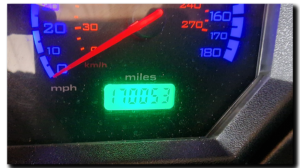
Finally I rolled into a dark and cold Oxford driveway at 1:30 in the morning with the Capo showing 170,053 miles in the dashboard. The arthritis in my knees is playing up and my backside has had enough of today …. but through all that I just feel so immensely proud of the Capo. So what next? A well earned clean and service in the short-term and then a full rebuild and line replacement for the rear brake, just to bring it back up to scratch and looking as fresh as the front brakes. I should also get around to replacing the fuel sender unit .. it stopped reading properly a year or two ago and I have all the parts to hand, but never found the time/enthusiasm. I think the Capo has earned it. After that? Maybe it’s time to head North for a change, who knows.
Tragic loss
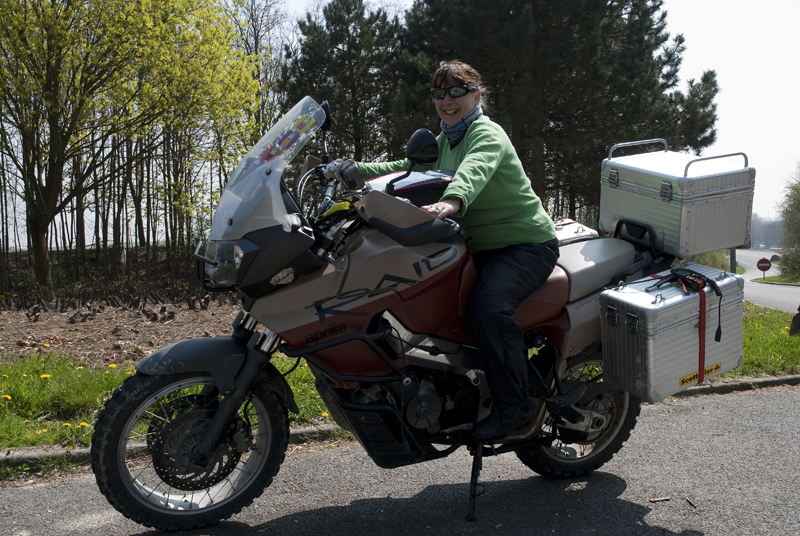 Today I mourn the passing of my soulmate, best friend and wife of almost 30 years – Janet. She fought so bravely for two years against cancer, but was finally taken from us yesterday after a sudden and unexpected downturn. Family were at her side at the end as she passed peacefully. Today the pillion seat is empty and the intercom silent …. for over thirty years we travelled together on two wheels. Goodnight my beloved sweetheart.
Clutch hose upgrade and Innovv K3 Dual camera dashcam
 Job 1
Job 1
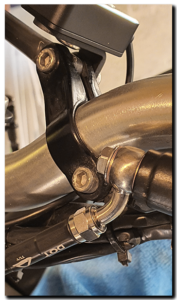
I managed to get a couple more Capo jobs out of the way recently. Firstly, replacing the clutch line for a nice new Venhill version to match the shiny ones on the front brakes. The hose required uses:
- 1x 90º Banjo
- 1x 45º Banjo
- 1x Venhill Powerhose Plus hydraulic line – 1125mm
It fitted perfectly, and while I was changing the line I also changed the banjo bolts and bleed screw for matching stainless steel units to complete the look. I have to admit, these are not cheap lines …. but I love the fit and flexibility with interchangeable ends. So for that I’m willing to overlook the extra hit on the wallet!
Job 2
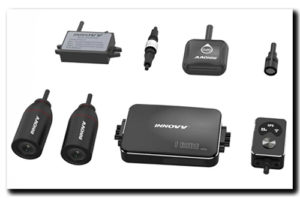 Secondly, I bit the bullet on an Innovv K3 dual camera system. As some may remember, I’ve previously tried the original K1 and the much improved K2. Unfortunately, the K1 DVR unit died after 12 months and the K2 turned itself into a brick with a failed firmware update. To be fair to the K2, it was leagues ahead of the K1 and (when it worked) was a truly fit-and-forget system. What went wrong I have no idea, I followed the update process to the letter and even had a few email exchanges with Rock Liu from Innovv, but they dried up when it looked like the unit was unrecoverable. I was lucky enough that the K1 and K2 had been supplied FOC, so nothing lost. This time however, it’s my own outlay. It’ll either be ‘third time lucky’ or ‘a fool and his money are soon parted’!
Certainly my first impressions on opening the box are:
- Slightly smaller DVR with no buttons
- Nice moulded waterproof connectors
- Comprehensive fitting kit with stainless fasteners and anodised aluminium brackets instead of plastic/steel
- Cameras physically identical to the K2 units but with different internals
- Addition of an external microphone
- Waterproof remote button for saving files and taking photographs as well as LED’s showing recording/GPS/WiFi status
Looking through the technical specification, it looks like the main upgrades over the K2 are:
- Dual core processor for better image processing
- Different camera internals ( Sony IMX291 LQR sensor)
Installation was of course, very similar to the K2. The power module connects directly to the battery positive and negative terminals and the yellow trigger wire went to the loom I still had in place that tapped into the rear lights/brake lights. As soon as the side/head lights are turned on there is a 10 second delay before the unit begins recording and when switched off, a 25 second delay before powering down the unit. The front camera comes with a 2m lead which is fine, but the rear has a 1.5m lead which for the Capo is way overkill. I only needed about 0.4m and hiding the rest away was a real pain.
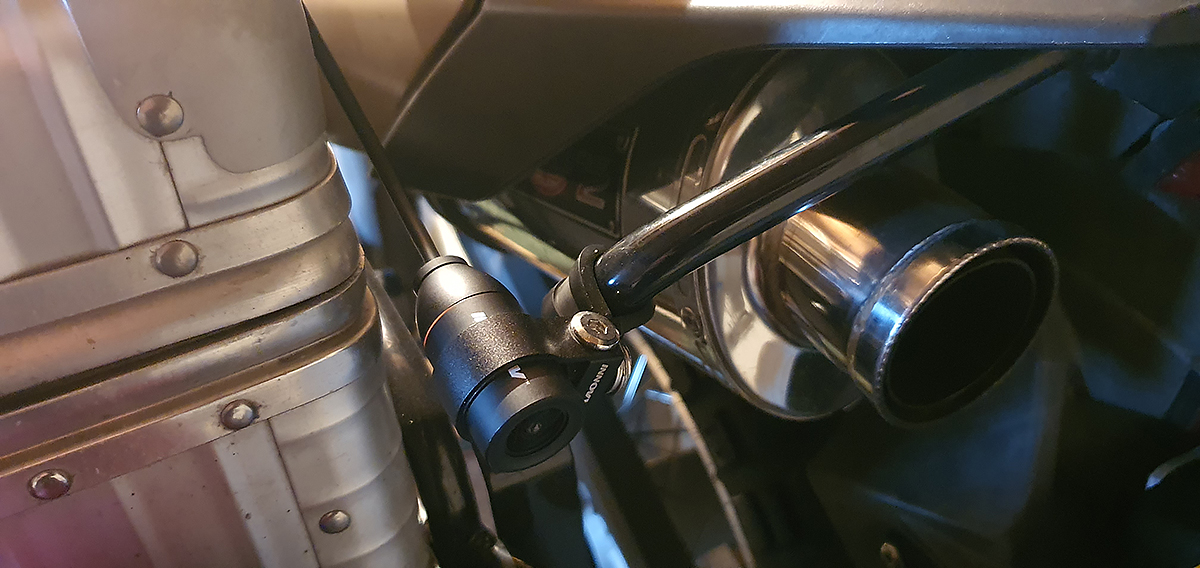
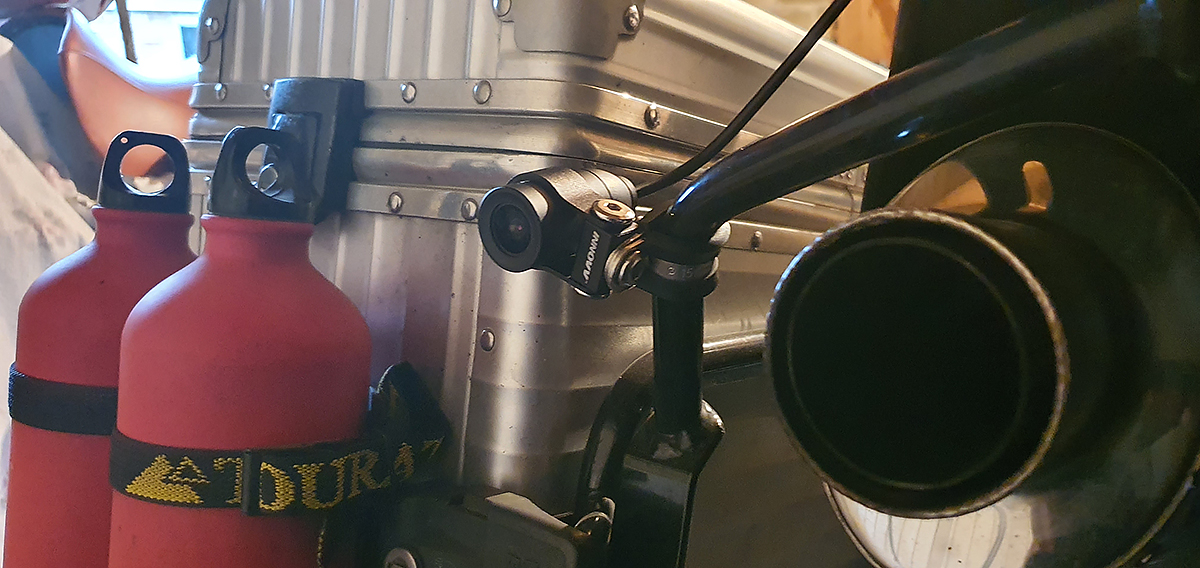
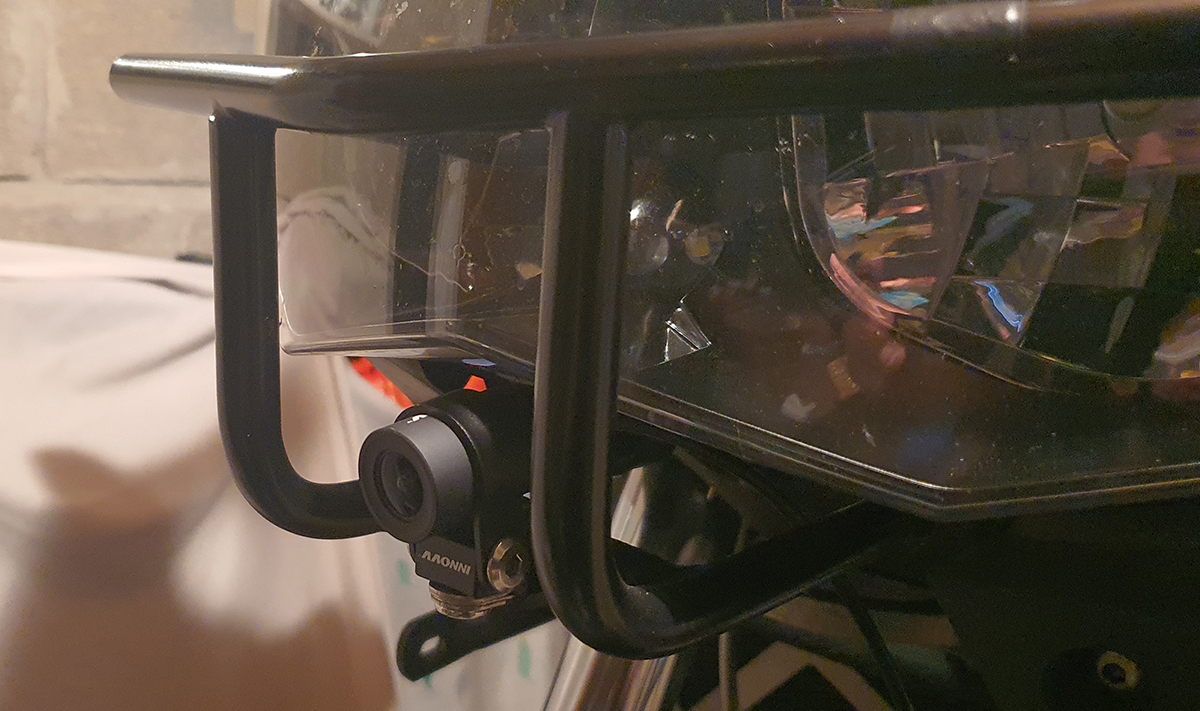
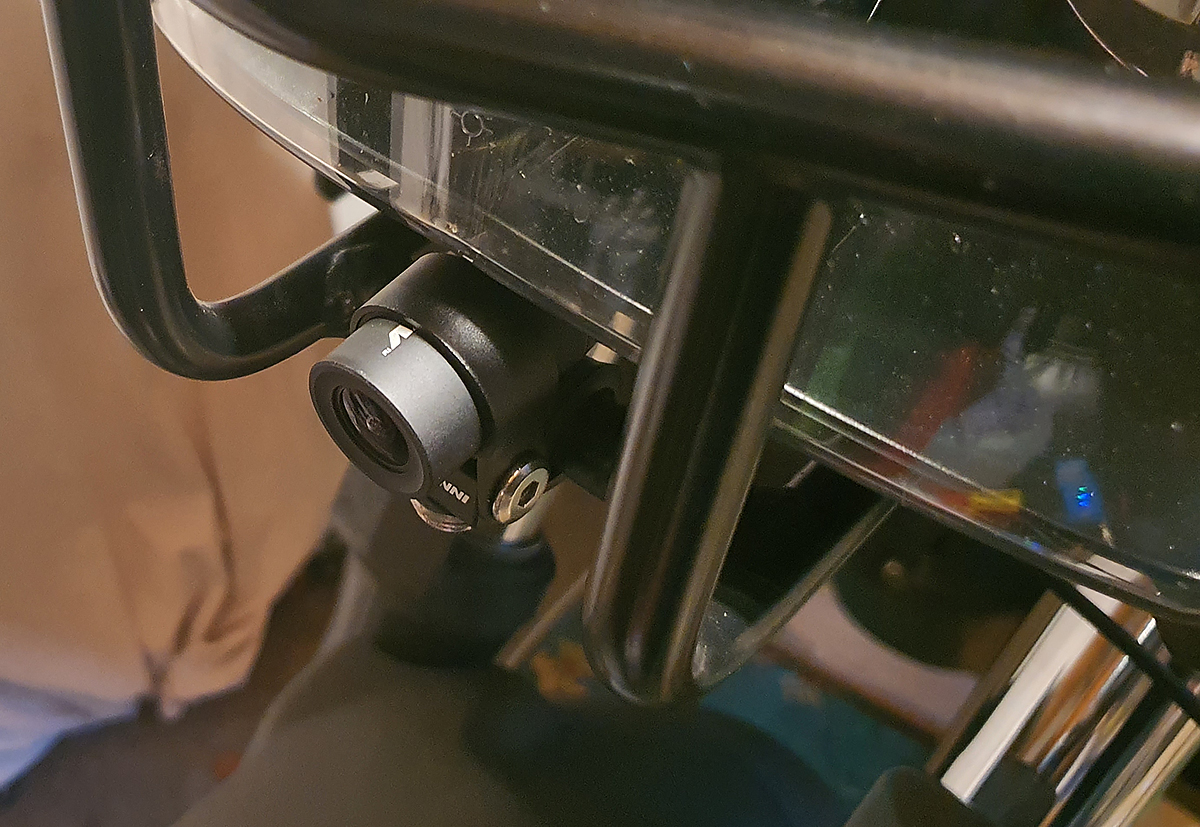
To install the cameras I used two 15mm rubber lined stainless steel ‘P’ clips – the front one on the Aprilia headlight guard and the rear on the pannier frame. The included mounting kit parts fitted to these clamps just fine and it only took a couple of minutes to get a nice neat install and great picture being recorded! Oh but one bit of advice ….. the supplied screws don’t use any washers, so once happy with the install, I went back and put a dab of thread-lock on all the screws just to be safe.